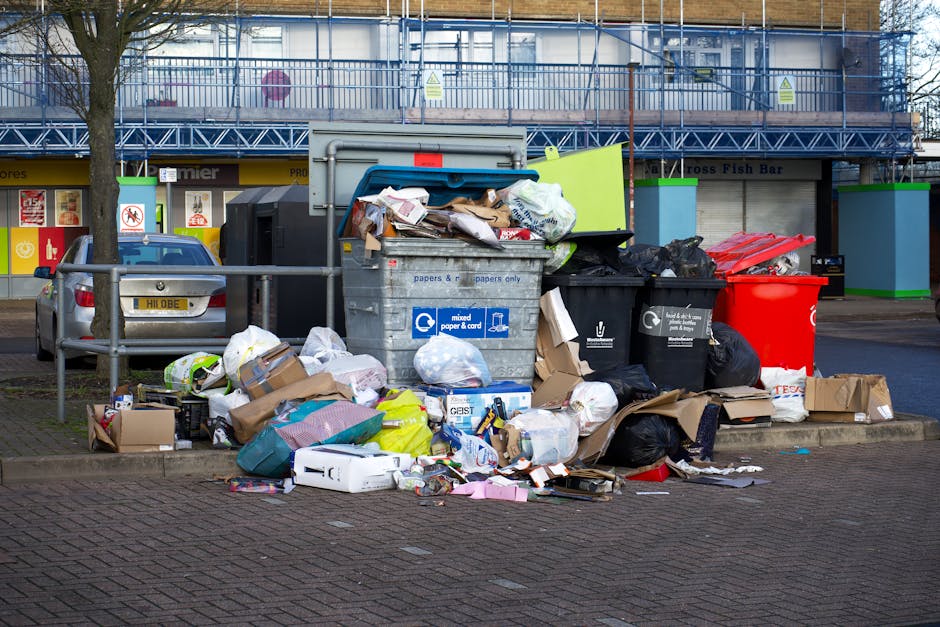
Rubbish removal for Euston Road flats (NW1): a practical guide for faster, cleaner clear-outs
Living or working in a flat near Euston Road can be convenient, but rubbish removal is rarely straightforward. Tight stairwells, limited kerb space, lift access rules, busy traffic, and neighbours who do not want bags left in the hallway all make the job more complicated than a standard house clear-out. That is why rubbish removal for Euston Road flats (NW1) needs a slightly different approach: one that is quick, careful, and organised from the start.
Whether you are clearing a one-bedroom flat, dealing with bulky furniture, or tidying after a refurb, the aim is the same: remove waste safely, avoid disruption, and leave the place ready for its next use. This guide explains how flat rubbish removal works, what to expect, where the common pitfalls are, and how to choose a service that suits the realities of central London living.
For readers comparing services, it can also help to look at the broader waste removal options available, along with specialist pages such as flat clearance and furniture disposal if bulky items are part of the job.
Table of Contents
- Why this matters in Euston Road flats
- How the service works
- Key benefits and practical advantages
- Who it is for and when it makes sense
- Step-by-step guidance
- Expert tips for better results
- Common mistakes to avoid
- Tools, resources and recommendations
- Law, compliance and best practice
- Options and comparison table
- Real-world example
- Practical checklist
- Conclusion
- Frequently asked questions
Why Rubbish removal for Euston Road flats (NW1) Matters
Flats around Euston Road sit in one of the busiest parts of London. That creates a very specific set of rubbish-removal challenges. Delivery lorries compete with taxis and buses, parking is constrained, and many buildings have managed access, concierge rules, or strict time windows for contractors. If you try to handle waste the wrong way, small issues can quickly become expensive delays.
It also matters because flat waste is rarely just "bags of rubbish". A proper clear-out often includes mixed items: old furniture, broken appliances, packaging, bagged household waste, refurbishment debris, and sometimes confidential paperwork or electrical items that need careful handling. Throwing everything into one pile may seem efficient, but it can create problems later if the load is not sorted or removed responsibly.
There is another practical reason this matters: flats are shared spaces. Hallways, stairwells, lifts, and bin stores are used by other residents every day. Leaving waste in communal areas even briefly can cause complaints, block access routes, and create hazards. A good clearance should feel almost invisible to everyone else in the building.
In real terms, the best rubbish removal for an NW1 flat reduces stress, avoids neighbour friction, and gets the job done without turning the building into a temporary skip yard. That is especially valuable for tenants moving out, landlords preparing for re-let, and owners managing refurbishments on a tight schedule.
How Rubbish removal for Euston Road flats (NW1) Works
The process is usually simpler than people expect, but it should still be handled with care. For most flats, the workflow starts with an assessment of what needs to go, how much there is, and whether there are access constraints. A clear picture at the beginning saves a lot of awkward surprises later.
Typically, a provider will ask for photos, a brief inventory, or a description of the load. That helps determine the right vehicle, crew size, and clearance method. If the flat contains only a few bags and some small items, the job may be straightforward. If there are wardrobes, mattresses, or bulky office-style furniture, planning becomes more important.
Once the scope is agreed, the crew arrives, protects access routes where needed, and removes the items from the flat to the vehicle. In a building with lifts, the team may need to coordinate with reception or building management. In buildings without lifts, manual carrying is often the only option, so efficient packing and careful lifting matter.
After removal, responsible providers sort items for reuse, recycling, or disposal. That distinction is more important than it sounds. A mixed flat clearance is not just about "taking stuff away"; it is also about making sure that reusable items and recyclable materials are separated where practical. If you want a more sustainability-focused approach, the recycling and sustainability information on the site is a useful companion read.
For a lot of people, the final step is the best one: seeing the flat clear, the corridor unobstructed, and the moving or refurbishment plan able to continue without drama. Not glamorous, perhaps. But very satisfying.
Key Benefits and Practical Advantages
Rubbish removal for Euston Road flats is not just about convenience. Done properly, it solves several problems at once.
- Saves time: You avoid multiple trips to a tip or recycling centre, which is rarely practical in central London.
- Reduces physical strain: Carrying heavy furniture down stairs is the sort of task that looks manageable until you are halfway down the second flight.
- Improves safety: Less clutter means fewer trip hazards in the flat and common parts.
- Protects the building: Careful handling helps avoid scratched walls, marked lifts, and upset neighbours.
- Supports faster turnovers: Landlords, letting agents, and sellers can move quickly to cleaning, decorating, or listing.
- Helps with responsible disposal: A professional approach makes recycling and proper sorting more likely than a rushed DIY job.
Another benefit that often gets overlooked is predictability. A flat clear-out service gives you a defined plan rather than a weekend of "we'll just see how much fits in the car". In the real world, those plans tend to collapse by 11am.
For customers who need more than mixed rubbish removal, it can be useful to compare related services such as furniture clearance and home clearance. The right option depends on whether you are dealing with general waste, single bulky items, or a full-property clear-out.
Who This Is For and When It Makes Sense
This service is a strong fit for a wide range of situations. The common thread is that the flat has more waste than can be handled easily through ordinary household disposal.
Typical users include:
- Tenants moving out who need to leave the flat tidy and avoid deductions or disputes.
- Landlords and agents preparing a unit for cleaning, decorating, or new occupants.
- Homeowners clearing accumulated clutter after years of use.
- Families helping a relative downsize from a flat in NW1.
- People handling a refurbishment who need mixed waste or leftover materials removed.
- Anyone with bulky furniture that is awkward to move through shared spaces.
It also makes sense when speed matters. If an inspection is due, a tenancy is ending, or new furniture is arriving soon, a structured rubbish removal plan is usually better than piecemeal DIY trips. If your waste includes refurbishment debris, it may also be worth looking at builders waste clearance rather than a standard household collection.
For larger or more complex scenarios, the difference between a light tidy and a full service can be significant. A small bag collection is one thing; clearing a loft, storage cupboard, and two wardrobes from a fourth-floor flat is another. That is where a proper assessment matters.
Step-by-Step Guidance
If you want the process to go smoothly, treat it like a small project rather than a last-minute chore. Here is the cleanest way to approach it.
- Walk through the flat and separate the waste. Group general rubbish, reusable items, furniture, electricals, and any breakables. You do not need museum-level precision; just enough to make the load clear.
- Check access points. Measure stairwells, note lift sizes, and identify any building rules about moving items through communal areas.
- Photograph the items. A few clear pictures help a provider estimate the workload accurately.
- Ask what can be taken. Confirm whether mixed waste, mattresses, white goods, or dismantled furniture are included.
- Agree the timing. In busy NW1 streets, arrival windows matter. A narrow time slot can help avoid vehicle access conflicts.
- Prepare the flat. Clear small loose items from around bulky furniture and make access as direct as possible.
- Remove personal or sensitive materials. Check drawers, cupboards, and behind furniture before anything leaves the building.
- After the collection, inspect the space. Make sure nothing has been left behind and that the route out is clean.
A simple rule helps here: the less uncertainty at the start, the faster and calmer the job tends to be. That is true whether you are moving out tomorrow or just want your front room back.
Expert Tips for Better Results
In our experience, the difference between a smooth clearance and a frustrating one often comes down to a handful of details that are easy to miss.
- Sort before the team arrives. Even a basic sort into "keep, donate, dispose" makes the whole process faster.
- Protect shared surfaces. If the building has narrow corridors or a lift, a little extra care goes a long way.
- Dismantle only when sensible. Flat-pack furniture may be easier to move in sections, but do not spend hours dismantling items unless it genuinely helps.
- Use photos for accurate quotes. A vague description can lead to a mismatch between expectation and reality.
- Ask about recycling routes. If sustainability matters to you, confirm how mixed loads are handled.
- Keep the exit path clear. A hallway full of shoes, prams, and parcels slows the job down and increases the chance of knocks and scrapes.
One practical detail people forget: bin stores in apartment buildings are not always designed for a sudden influx of extra waste. If your clear-out is substantial, it is usually better to remove it in one planned visit than to create several days of overflow.
If you are uncertain about what kind of service you need, the site's pricing and quotes page is a useful place to understand how estimates are commonly approached before you book.
Common Mistakes to Avoid
Most clearance headaches are preventable. The key is to avoid the predictable errors that tend to cause delays or extra cost.
- Underestimating the volume: A few bags can become a full van load once cupboard contents, broken items, and packaging are added up.
- Ignoring access restrictions: Building rules, concierge hours, and lift reservations can affect the job more than the waste itself.
- Leaving sorting too late: If reusable items are mixed with everything else, you lose flexibility.
- Forgetting to remove valuables: Check every drawer and shelf before collection day.
- Assuming all waste is the same: Furniture, builders' waste, and household rubbish may need different handling.
- Choosing only on price: Cheap quotes can be misleading if they exclude access, heavy lifting, or disposal types.
There is also a subtle mistake that catches people out: leaving the clear-out until the last minute and then expecting everything to happen in one perfect hour. It can happen, but it is much less stressful when there is a little lead time.
Tools, Resources and Recommendations
You do not need specialised equipment for a small flat clearance, but the right basics make the process much easier.
| Item or resource | Why it helps | Best used for |
|---|---|---|
| Strong bin bags or heavy-duty sacks | Keeps loose waste contained and easier to move | General rubbish, soft items, mixed bagged waste |
| Labels or sticky notes | Makes sorting quicker and reduces confusion | Keep, donate, dispose piles |
| Measuring tape | Helps check furniture against stairwells and lifts | Bulky items, wardrobes, beds, large appliances |
| Phone camera | Useful for quotes and record-keeping | Before-and-after planning, access checks |
| Building contact details | Speeds up permission checks and access coordination | Managed blocks, concierge buildings, serviced flats |
From a service perspective, the most relevant supporting pages are often the ones that explain how a company works rather than just what it removes. For example, insurance and safety is worth reading if you want to know how a provider approaches risk, while health and safety policy can be helpful for understanding working practices in shared buildings.
If you are dealing with a smaller quantity of bulky items rather than a full flat load, you may also want to compare furniture disposal with a broader house clearance style service. The right tool is the one that fits the job, not the one with the longest name.
Law, Compliance, Standards, or Best Practice
Flat rubbish removal in London is not just about logistics. There are practical compliance and duty-of-care issues to keep in mind. You do not need to become an expert in waste legislation to make a sensible choice, but you should expect any reputable provider to operate carefully and responsibly.
In UK practice, waste should be handled by an appropriate carrier and disposed of through legitimate channels. For a customer, the most useful question is simple: can the provider explain how waste is removed, sorted, and disposed of? If the answer is vague, that is usually a warning sign.
There are also building-specific standards to think about. Many apartment blocks have rules about protecting communal areas, using lifts, observing quiet hours, and not blocking fire exits. Even if the waste itself is small, poor handling in a shared building can create safety issues.
Best practice usually includes:
- clear advance communication about the contents and access arrangements
- careful movement through hallways and lifts
- responsible separation of recyclable or reusable items where practical
- safe lifting and manual handling
- respect for neighbours and building management requirements
If you are comparing providers, it is sensible to read supporting trust pages such as about us and terms and conditions. They help you understand how the service is structured, what is expected on both sides, and how bookings are typically managed.
For online booking and payment confidence, the payment and security information is also worth a look. It does not remove the need for common sense, but it does help you feel more comfortable before committing.
Options, Methods, or Comparison Table
There is more than one way to clear rubbish from a flat. The right option depends on volume, access, time pressure, and whether the waste is mixed or specialised.
| Method | Best for | Pros | Trade-offs |
|---|---|---|---|
| DIY trips to a disposal site | Small volumes, flexible schedules | Can work for light loads; direct control | Time-consuming, vehicle access issues, lifting burden |
| Man-and-van style clearance | Mixed flat waste, bulky items | Fast, practical, minimal disruption | Requires good planning and a clear brief |
| Specialist flat clearance | Full clear-outs, move-outs, downsizing | More complete service, better for larger jobs | May be more than you need for a few bags |
| Builders' waste clearance | Refurbishment debris, renovation leftovers | Suited to heavy, awkward construction waste | Not ideal for ordinary household clutter |
For a typical NW1 flat, the man-and-van or flat-clearance approach is often the most efficient because it handles stairs, parking limitations, and mixed items in one visit. If your job is more renovation-led, builders waste clearance may be the better fit.
Case Study or Real-World Example
Consider a realistic scenario: a two-bedroom flat near Euston Road needs to be cleared before new tenants move in. The contents include a sofa, a broken chest of drawers, a mattress, several bags of household rubbish, and leftover packaging from a recent furniture delivery.
The building has a lift, but the lift is small and shared. There is also limited waiting space outside, so the crew cannot afford long delays. The best approach is to sort the flat in advance, identify the large items, confirm access with building management, and arrange a collection window that avoids peak disruption.
On the day, the team removes the bulky items first, then bags the mixed waste, and finally checks cupboards and corners for anything left behind. The flat is left clear, the corridor is clean, and the landlord can move on to cleaning and re-letting without losing another day.
That kind of job sounds straightforward, but the detail matters. A missing parking plan or an unmeasured wardrobe can turn a simple collection into a long afternoon. The difference is rarely dramatic; it is usually just good preparation.
For people dealing with full-property contents rather than a single room, a broader flat clearance service is often more practical than a small one-off pickup.
Practical Checklist
Use this checklist before collection day to keep the process smooth and avoid forgotten items.
- Take clear photos of everything to be removed
- Separate keep, donate, recycle, and dispose piles
- Check cupboards, drawers, loft spaces, and under beds
- Confirm building access rules and lift availability
- Measure any bulky furniture that needs moving out
- Remove personal documents, keys, and valuables
- Ask what types of waste are included in the quote
- Make sure the entry path is clear and safe
- Confirm the collection time and contact details
- Review the space after the clearance is complete
A good flat clearance is usually won or lost before the van arrives. If the access is clear and the scope is well defined, the rest tends to fall into place.
Conclusion
Rubbish removal for Euston Road flats (NW1) works best when it is treated as a coordinated, building-aware service rather than a simple rubbish run. The location, the access constraints, the shared spaces, and the mix of items all shape what a good job looks like. Once you understand that, the rest becomes much easier to manage.
If you are moving out, clearing clutter, or preparing a flat for sale or refurbishment, the smartest next step is to define the waste clearly, check access, and choose a service that matches the job. That approach saves time, reduces stress, and helps you avoid the most common surprises. And, truth be told, in central London that is already a win.
Get a free quote today and see how much you can save.
To discuss your needs or arrange a collection, you can also visit the contact page for the next steps.
Frequently Asked Questions
What does rubbish removal for a flat in Euston Road usually include?
It typically covers general household waste, bagged rubbish, bulky items, and mixed contents from a flat clear-out. Exact inclusions depend on the provider and the type of waste.
Can rubbish be removed from a flat with no lift?
Yes. Many clearances happen in stair-only buildings. The key is accurate planning, realistic timing, and ensuring the crew knows about the access before arrival.
How is rubbish removal different from flat clearance?
Rubbish removal usually refers to waste and unwanted items being taken away. Flat clearance is broader and may include furniture, contents, and a more complete clear-out of the property.
Is it better to book a small rubbish pickup or a full service?
If you only have a few bags, a smaller pickup may be enough. If you have furniture, multiple rooms, or time pressure, a full clearance is usually more efficient.
What should I do before the collection team arrives?
Separate items, remove valuables and personal documents, check access routes, and take photos if you want a quote checked in advance. A little preparation saves a lot of back-and-forth.
Can old furniture be taken from a flat in NW1?
Yes, provided the service accepts furniture items. Sofas, wardrobes, mattresses, and tables are common examples, but it is always worth confirming in advance.
Do I need permission from the building manager?
Sometimes, yes. Many blocks have rules about lift use, access times, or contractor arrivals. If your building is managed, check first to avoid delays on the day.
How do I know if waste is being handled responsibly?
Ask how items are sorted, whether recyclable materials are separated where practical, and whether the company can explain its disposal process clearly. Vague answers are not ideal.
What if I also have refurbishment debris?
That may be better handled as builders' waste rather than ordinary household rubbish. For mixed renovation waste, a specialist route is usually the cleaner choice.
Is rubbish removal suitable for tenants moving out?
Absolutely. It is often one of the best uses for the service, especially when you want the flat left tidy and ready for inspection, cleaning, or handover.
Can I include broken appliances or electrical items?
Often yes, but electrical and heavier items should be declared in advance. That helps the provider plan the right handling and disposal method.
Where can I check more about the company before booking?
The most useful pages are usually about us, insurance and safety, and complaints procedure, as they help you understand service standards and support processes.