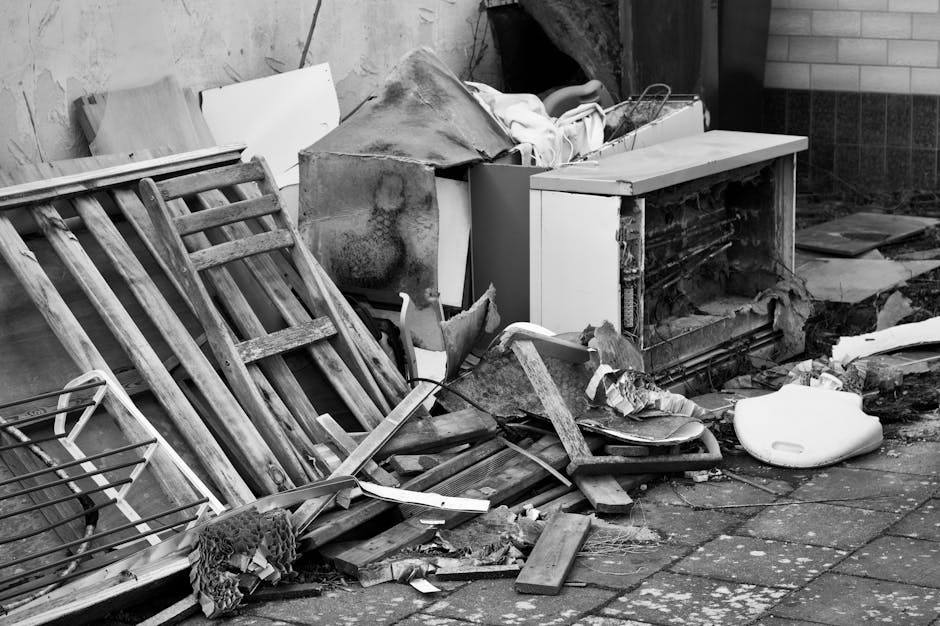
Hidden costs to avoid with Euston rubbish clearance
Rubbish clearance sounds simple enough: the waste is there, the team arrives, it disappears. Nice and tidy. But anyone who has booked clearance in a busy part of London knows the headline price is not always the full story. The real challenge is spotting the hidden costs to avoid with Euston rubbish clearance before they sneak onto your invoice or slow the job down. A tiny staircase, a blocked loading bay, one awkward sofa, or a last-minute sort-through can all change the final bill.
This guide breaks down the charges people often miss, how clearance pricing usually works, and the practical steps that help you keep control. If you are arranging a flat clean-out, office clearance, loft tidy-up, or general waste removal near Euston, it is worth taking ten minutes now to save a headache later. Let's face it, nobody enjoys paying extra for something they thought was already covered.
Table of Contents
- Why hidden costs matter
- How rubbish clearance pricing works
- Key benefits of planning properly
- Who needs this and when it makes sense
- Step-by-step guidance
- Expert tips for better results
- Common mistakes to avoid
- Tools, resources and recommendations
- Law, compliance and best practice
- Options and comparison table
- Case study or real-world example
- Practical checklist
- Conclusion
- Frequently asked questions
Why Hidden costs to avoid with Euston rubbish clearance Matters
Hidden costs matter because rubbish clearance is often booked under pressure. Maybe you are moving out, clearing a property for sale, dealing with building waste after a small renovation, or just trying to reclaim a room that has become a bit of a storage cave. In these situations, people usually want speed and certainty. Extra charges, even modest ones, can throw off the whole plan.
In Euston, the practical realities of central London can add complexity. Narrow access, limited parking, timed collections, shared entrances, and higher demand all affect how a job is quoted. A company may give you a fair estimate at first, then add costs for things that were not fully explained up front. That does not automatically mean anything is wrong, by the way. Sometimes the price genuinely changes because the job changes. The issue is when that possibility is not made clear.
There is also a trust angle. A clear, transparent quote tends to signal a more professional service. If a provider explains what is included, what is not, and what might change the cost, that is usually a good sign. If they dodge detail, well, that is when you should pause.
Practical takeaway: the cheapest rubbish clearance quote is not always the best value. The safer choice is often the one that explains the moving parts clearly before a single item is lifted.
How Hidden costs to avoid with Euston rubbish clearance Works
Most rubbish clearance services work in a similar way. The provider assesses the volume, type, and accessibility of the waste, then gives a price based on labour, transport, disposal, and any special handling requirements. The hidden costs usually appear when one of those factors is underestimated or left vague.
Here is the simple version: a quote may look fixed, but the final amount can change if the job turns out to be larger, heavier, riskier, or more time-consuming than expected. That might happen because the items were described too loosely, because access is more difficult than assumed, or because certain materials need separate disposal.
Common examples include mattresses, white goods, heavy furniture, mixed waste, builders' rubble, electrical items, and anything contaminated or difficult to handle. Some jobs also require extra labour if items need dismantling, carried down multiple flights of stairs, or loaded from a property with tricky access. A cupboard hidden in the loft can be a harmless-looking line item until someone has to haul it down a tight staircase. Then, suddenly, it is not so harmless.
If you are arranging a specific type of clearance, it helps to look at the service that matches the job rather than assuming one generic waste collection fits everything. For example, furniture-heavy jobs may be better suited to furniture clearance or furniture disposal, while larger property clear-outs may sit better under home clearance, house clearance, or flat clearance. Matching the service to the job can reduce surprises.
Typical cost triggers to watch for
- Extra volume beyond the original estimate
- Heavy or awkward items that need two-person handling
- Restricted access, stairs, or long carry distances
- Parking or waiting delays
- Special waste categories needing separate handling
- Short-notice booking or out-of-hours work
- Dismantling, bagging, or sorting requested on site
In plain English, the clearer you are about the job, the easier it is to avoid the awkward "oh, just one more thing" conversation on the day.
Key Benefits and Practical Advantages
Once you know where hidden charges come from, the advantages of proper planning become obvious. You are not just trying to save money. You are trying to make the whole clearance process calmer, cleaner, and more predictable.
1. Better budgeting
A detailed quote gives you a more realistic number to work with. That matters whether you are clearing a rental flat, getting ready for a move, or managing a business premises. If you have already got enough going on, the last thing you need is a bill that jumps because of a missed detail.
2. Faster collection on the day
When the items are described properly, the team can arrive with the right vehicle, crew size, and disposal plan. Fewer surprises means less delay. And fewer delays usually means less money spent.
3. Less stress during property moves or refurbishments
Rubbish clearance often sits in the middle of a bigger project. A move, a refit, a renovation, a bereavement, or a spring clean can already feel a bit relentless. Clear pricing removes one more layer of uncertainty.
4. Better decision-making between services
Sometimes the right answer is not the broadest service, but the one built around your exact need. A builder's skip might suit some jobs better than a full clearance. A focused job, such as builders waste clearance, may be more efficient for renovation waste, while office clearance may be the sensible option for desks, chairs, files, and commercial debris.
5. Stronger trust and accountability
Transparent pricing is a good sign that a business is organised. It suggests the company understands the job and is not relying on vague wording to protect itself later.
| Benefit | What it means in practice | Why it helps you |
|---|---|---|
| Clear quotation | You know what is and is not included | Less risk of invoice shock |
| Accurate job description | The crew arrives prepared | Faster, smoother collection |
| Right service choice | The waste is handled appropriately | Better value and fewer delays |
| Transparent extras | Potential add-ons are explained in advance | More control over the final price |
Who This Is For and When It Makes Sense
This topic matters to more people than you might think. If you are in or around Euston and need anything cleared, hidden costs can affect you. In our experience, the people most likely to benefit from a careful approach are usually the ones working to a deadline.
Homeowners and tenants
If you are emptying a loft, clearing a spare room, or moving out of a flat, you may be dealing with mixed waste, bulky furniture, and items that you have not looked at properly in years. That is exactly when extra labour or access charges can appear if the company was not told the full picture.
Landlords and letting agents
Turnaround is everything. You may need a property cleared quickly between tenancies. A rushed booking can easily miss details such as cellar access, lift restrictions, or abandoned furniture that is heavier than it looks.
Businesses and office managers
Office clearances often involve desks, chairs, monitors, filing cabinets, packaging, and confidential material. A good provider should be clear about what counts as standard collection and what could affect price. If you are clearing commercial space, it can also help to review business waste removal and office clearance options.
Builders and renovators
Construction and refurbishment jobs are notorious for surprise costs. Waste volume can rise quickly, and dense materials are not always priced the same as mixed household rubbish. If you are dealing with plasterboard, timber, tiles, or rubble, make sure the quote reflects the actual waste stream.
People handling estates or sensitive clearances
Sometimes the job is not just practical, it is emotional too. A family property can take longer than expected because people want to set aside certain items, check paperwork, or decide what should be kept. That is normal. A patient, transparent service tends to work better here than a rushed, inflexible one.
Step-by-Step Guidance
If you want to avoid hidden costs, the best approach is simple and systematic. No drama. Just a bit of prep before the booking.
- List everything that needs removing. Include bulky items, bagged waste, loose rubbish, and anything that might need dismantling. If it is hiding in a loft, garage, or garden corner, mention it.
- Separate waste types. General rubbish, furniture, builders' waste, and electrical items can all affect pricing. Mixed waste is often more complicated than it first appears.
- Check access carefully. Measure stairwells, note lift access, and consider parking. In central London, a few extra minutes carrying items can change the job significantly.
- Ask what the quote includes. Does it cover labour, loading, disposal, parking, and VAT if applicable? Does it cover dismantling or only collection?
- Request clarity on extras. Ask what happens if the volume is greater than expected or the crew encounters restricted access.
- Choose the matching service. For furniture-heavy jobs, use a furniture-specific service. For storage areas, consider loft clearance or garage clearance. For outdoor waste, garden clearance may be more appropriate.
- Confirm timing and entry details. Share postcode, floor level, access codes, loading restrictions, and the best contact number.
- Keep a written record. Even a simple email summary helps avoid misunderstanding later. Nothing fancy, just something you can refer back to.
If you are clearing a property with lots of mixed items, a general waste removal service may be enough, but it is worth checking whether a more targeted service is cheaper and easier.
Expert Tips for Better Results
A few small habits make a surprisingly big difference. These are the kinds of things that do not sound exciting, but they save money and hassle.
Be unusually specific
"A few bits of furniture" is not enough. Say whether that means a sofa, wardrobe, bed frame, chest of drawers, or all four. If a piece is water-damaged, broken, or glued together in a way that makes it awkward to move, say so. That sort of detail matters more than people think.
Use photos whenever possible
Even two or three clear pictures can help a provider judge the volume and access. Stand in the doorway, take one wide shot, and one close shot. It is a tiny effort that often prevents a messy misunderstanding.
Ask about weight as well as volume
Some quotes are based on how much space the rubbish takes up. Others are influenced by weight, labour, or disposal costs. Heavy waste like rubble, soil, or broken fixtures can be priced differently from light mixed rubbish.
Check insurance and safety expectations
A reputable provider should be able to explain how they handle lifting, access, and damage prevention. You do not need a lecture, just reassurance that the team knows what they are doing. If you want to read more about this side of the service, the site's insurance and safety information and health and safety policy are useful places to start.
Keep the job tidy before the team arrives
This sounds obvious, but it helps. If loose items are already grouped together, the crew can work faster. You are not paying for people to wander around trying to work out what stays and what goes. Well, unless you really want that sort of tour.
Common Mistakes to Avoid
Most hidden costs happen because of a handful of avoidable mistakes. The good news? They are easy to spot once you know what to look for.
- Underestimating volume: A half-full room can turn into a full van very quickly.
- Forgetting access issues: Narrow hallways, no parking, or multiple flights of stairs can alter the job.
- Assuming all waste is treated equally: Furniture, builders' waste, and mixed household rubbish are not the same.
- Not asking about disposal fees: Some providers pass on charges for particular items or load types.
- Skipping the quote detail: A short quote is not always a transparent one.
- Leaving it until the last minute: Rush bookings can be more expensive, especially if the provider has to fit you in quickly.
- Ignoring special items: Mattresses, appliances, and large office items often come with separate handling considerations.
A very common one is this: people assume that because a job sounds straightforward, it will be priced straightforwardly. Not quite. A straightforward-looking job can still involve awkward access, unexpected weight, or just more time than expected. That is where the extra cost creeps in.
Tools, Resources and Recommendations
You do not need fancy software to stay on top of rubbish clearance costs. A basic, practical approach is usually enough.
Useful things to prepare
- A rough list of items by room
- Photos of the waste and access points
- Postcode and floor level
- Parking or loading notes
- Any time restrictions or building rules
- A note of items you want kept separate
Service pages worth checking
If you are planning a broader clear-out, the following pages can help you match the service to the job more accurately: house clearance, flat clearance, home clearance, and furniture clearance. If the job includes outdoor or storage areas, garage clearance, loft clearance, and garden clearance are also useful to review.
Pricing and quote guidance
Before booking, it can help to review the provider's pricing and quotes guidance so you know what information to have ready. If the business explains its payment approach clearly, that is another good sign. The payment and security page can also tell you how careful they are about the transaction side of things.
Law, Compliance, Standards, or Best Practice
Rubbish clearance in the UK sits within a wider set of responsibilities around safe handling, legal disposal, and duty of care. You do not need to become a compliance expert to book a clearance, but it does help to understand the basics. A legitimate operator should know where waste goes, how it is handled, and what happens to special materials.
For householders, landlords, and businesses, the main point is simple: do not hand waste to anyone who cannot explain how it will be disposed of properly. That is especially true for mixed waste, electrical items, and commercial clearances. If a provider seems vague about disposal routes or documentation, be cautious.
Good practice also includes safe lifting, sensible vehicle loading, and respectful handling of the property. In busy areas like Euston, it is not just about the rubbish itself. It is about entrances, neighbours, shared spaces, and not causing avoidable disruption. A professional crew should be able to work efficiently without leaving the building looking like a second mess has arrived.
If sustainability matters to you, it is reasonable to ask how items are sorted for reuse, recycling, or disposal. The company's recycling and sustainability page can be a useful reference point if you want to understand their approach.
Options, Methods, or Comparison Table
Different clearance methods suit different jobs. Choosing the wrong one can create the very hidden costs you are trying to avoid.
| Method | Best for | Possible hidden cost risk | Usually worth it when |
|---|---|---|---|
| General rubbish clearance | Mixed everyday waste | Extra charges if waste is heavier or more specialised than expected | You have a broad mix of items and need a simple collection |
| Furniture clearance | Sofas, beds, wardrobes, tables | Dismantling or access fees if items are large or awkward | The job is mostly bulky household furniture |
| Builders waste clearance | Renovation and construction debris | Higher costs if dense materials were not declared | You are clearing post-refurbishment rubble and site waste |
| Office clearance | Desks, chairs, filing, commercial items | Charges for large volumes, heavy items, or special handling | You are clearing a workplace or commercial unit |
| House or home clearance | Whole-property or multiple-room clear-outs | Price changes if volume was underestimated | You want one coordinated clearance rather than piecemeal removal |
The main lesson here is not that one method is better than another. It is that the right method usually avoids friction. And friction, in clearance jobs, often turns into extra cost.
Case Study or Real-World Example
Picture a small flat near Euston that needs clearing after a tenancy ends. On first glance, the job looks manageable: a sofa, a bed frame, two chairs, a couple of bags, and some broken household items. The tenant assumes it will be a quick collection. Then the detail emerges.
The bed frame needs dismantling. The sofa will not fit down the stairwell in one piece. The building has limited parking, so the vehicle has to wait nearby. There is also a separate pile of mixed bits in a storage cupboard that was not mentioned at the start. None of these things are dramatic on their own, but together they can shift the final cost.
Now compare that with a better-prepared booking. The customer sends photos, explains access, mentions the stairs, and separates the items into furniture and mixed waste. The provider can plan properly, quote more accurately, and turn up ready. Same property. Same basic rubbish. Very different outcome.
That is really the whole point of avoiding hidden costs: not to overcomplicate the job, but to remove unnecessary surprises.
Practical Checklist
Use this checklist before you confirm your Euston rubbish clearance booking.
- Have I listed every item that needs removing?
- Have I included photos or a clear description?
- Do I know whether the waste is mixed, bulky, heavy, or specialist?
- Have I checked access, stairs, and parking restrictions?
- Do I know whether dismantling is needed?
- Have I asked what the quote includes and excludes?
- Have I checked for likely extras such as waiting time or additional labour?
- Have I chosen the service that best matches the job?
- Have I confirmed timing and contact details?
- Have I kept a written copy of the quote or summary?
If you can tick all of those off, you are in a much better position. Not perfect, maybe. But much better.
Conclusion
The hidden costs to avoid with Euston rubbish clearance usually come down to the same few things: vague descriptions, access surprises, the wrong service choice, and not asking enough questions before booking. Clear communication solves most of it. Good planning solves the rest.
Whether you are clearing a flat, removing office furniture, dealing with builders' waste, or simply trying to reclaim some breathing room in a cluttered home, the smartest move is to get the details right first. That gives you better pricing, a smoother collection, and far less stress on the day. And honestly, that is worth a lot when you are already juggling everything else.
Get a free quote today and see how much you can save.
If you want to understand the people behind the service, you can also learn more on the about us page or get in touch through the contact page when you are ready. A quick conversation now can save a lot of faff later.
Frequently Asked Questions
What are the most common hidden costs in rubbish clearance?
The most common ones are extra labour, difficult access, parking or waiting time, unexpected volume, and charges for special waste types such as heavy materials or bulky furniture.
How can I avoid surprise charges with Euston rubbish clearance?
Give a full description of the waste, share photos if possible, mention stairs or parking issues, and ask exactly what the quote includes before you book.
Is a fixed quote always safe?
Not always. A fixed quote is useful, but only if the provider has enough accurate information. If the job changes on arrival, the final price may still change depending on the terms.
Do furniture items cost more to remove?
They can, especially if they are large, heavy, awkward to carry, or need dismantling. Sofas, wardrobes, and bed frames are common examples.
Why does access affect the price so much?
Because access affects time, labour, and vehicle loading. Stairs, no lift, narrow corridors, and long carry distances can make a simple-looking job more demanding.
Are builders' waste jobs more expensive than normal rubbish clearance?
Often, yes. Builders' waste can be heavier and more difficult to dispose of properly, so it is usually priced differently from general household rubbish.
Should I choose a specialist service for a flat or house clearance?
If the property is being fully cleared or contains lots of bulky items, a dedicated flat clearance or house clearance service is usually more efficient and easier to price accurately.
What should I ask before accepting a quote?
Ask what is included, what might trigger extra charges, how access is factored in, whether dismantling is covered, and how payment works.
Can I reduce the cost by sorting waste myself?
Yes, sometimes. If items are sorted clearly and access is easy, the team may be able to work faster. Just make sure you do not create a separate handling issue by overpacking bags or mixing different waste types.
How do I know if a company is trustworthy?
A trustworthy company explains pricing clearly, answers questions without fuss, and is transparent about safety, disposal, and payment. If they avoid detail, that is a red flag.
What if I am not sure how much waste I have?
Take photos of the area from a few angles and describe the rooms or storage spaces involved. A provider can usually make a much better estimate from that than from a rough guess.
Is sustainability worth asking about for rubbish clearance?
Yes. Many people want items reused or recycled where possible, and a clear sustainability approach is a good sign of a well-run clearance service. It also helps you feel a bit better about the whole process, which never hurts.