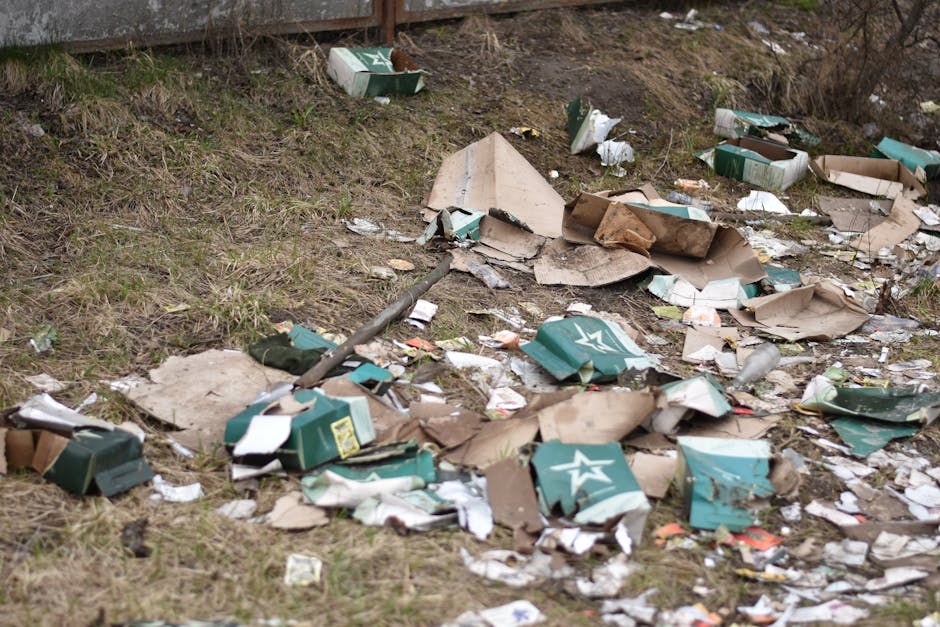
Dealing with fly-tipping on Euston Road: quick steps
Fly-tipping turns a busy stretch of London into a mess faster than you'd think. On Euston Road, where footfall is constant and space is already tight, even a small pile of dumped waste can block access, attract vermin, create a safety risk, and make a street look neglected in a matter of hours. If you are dealing with fly-tipping on Euston Road: quick steps matter because the longer rubbish sits, the harder it is to contain the problem.
This guide breaks the process down in plain English. You'll learn what to do first, how to stay safe, when to report it, how professional clearance can help, and how to avoid the usual mistakes that make a bad situation worse. If you need broader background on the business behind this kind of work, you can also explore the company's about us page and its approach to recycling and sustainability.
Let's face it, nobody wants to spend their morning looking at dumped mattresses, broken furniture, or black bags stuffed into a corner by the kerb. But a calm, quick response usually saves time, money, and a fair amount of stress. And yes, it can be handled.
Table of Contents
- Why Dealing with fly-tipping on Euston Road: quick steps Matters
- How Dealing with fly-tipping on Euston Road: quick steps Works
- Key Benefits and Practical Advantages
- Who This Is For and When It Makes Sense
- Step-by-Step Guidance
- Expert Tips for Better Results
- Common Mistakes to Avoid
- Tools, Resources and Recommendations
- Law, Compliance, Standards, or Best Practice
- Options, Methods, or Comparison Table
- Case Study or Real-World Example
- Practical Checklist
- Conclusion
- Frequently Asked Questions
Why Dealing with fly-tipping on Euston Road: quick steps Matters
Fly-tipping is not just an eyesore. On a major road like Euston Road, dumped waste can affect pedestrian movement, shopfront access, office entrances, delivery operations, and emergency routes. A single load of waste can also spread quickly if people assume the spot is already a dumping ground. That is the annoying part: one person's shortcut becomes everyone else's problem.
There is also a practical side. Loose rubbish can be blown into the road, sharp edges can injure passers-by, and suspect waste may include hazardous material mixed in with ordinary junk. You cannot always tell by looking. A wet cardboard box and a black sack may seem harmless until you get close and realise there is broken glass, paint tins, or something that should not be handled casually.
For businesses, landlords, managing agents, and office occupiers, quick action helps preserve the site's appearance and reduces disruption. That matters on a road as visible as Euston Road, where first impressions count and where people notice clutter immediately. There is a quiet reputational cost too. Nobody wants visitors stepping over a pile of dumped rubbish outside the entrance.
Key point: the fastest response is usually the safest one, not the bravest one. Assess, document, report, and remove using the right method.
How Dealing with fly-tipping on Euston Road: quick steps Works
In practice, dealing with fly-tipped waste follows a simple pattern. First, you identify the risk. Then you record what has been left, decide whether it is safe to touch, and work out who should deal with it. Sometimes that will be the local authority, sometimes the landowner or occupier, and sometimes a licensed clearance provider where the waste is on private property or affecting a managed site.
On a busy London road, the process usually moves quickly because access and safety are part of the issue. If waste is sitting near a doorway, in a loading bay, or by a shared access route, you often need a same-day decision. A good response is not just about removing the rubbish; it is about doing it without creating a wider problem. That means keeping people away from sharp items, avoiding contamination, and separating reusable or recyclable material where possible.
There is a difference between a casual tidy-up and proper waste clearance. A proper response should consider sorting, safe handling, transport, and disposal routes. If the material is bulky, mixed, damp, or potentially contaminated, it makes sense to bring in a team that understands lifting, loading, and safe disposal. If you want to understand how a reputable provider presents its standards, the site's health and safety policy and insurance and safety information are worth checking.
Truth be told, the "how" is usually less dramatic than people expect. It is mostly about speed, judgement, and not making assumptions.
Key Benefits and Practical Advantages
Responding quickly to fly-tipping gives you more than a clean pavement. It protects access, reduces risk, and keeps the area usable. That sounds obvious, but in day-to-day operations those small wins add up.
- Less disruption: entrances, bins, loading points, and walkways remain open.
- Lower safety risk: fewer chances of cuts, trips, contamination, or pest attraction.
- Better presentation: important for offices, retail units, and managed properties.
- Faster recovery: the longer waste sits, the more likely it becomes a bigger job.
- Improved traceability: early photos and notes help if follow-up reporting is needed.
- Cleaner separation: reusable, recyclable, and non-recyclable materials can be handled more effectively.
There is also a commercial advantage. If you run or manage space near Euston Road, a quick and organised response reassures tenants, staff, and visitors that the place is being looked after. Small detail, big effect. People notice when a site feels on top of things.
Who This Is For and When It Makes Sense
This guide is relevant if you are a property manager, office manager, landlord, facilities lead, shop owner, building contractor, or even a resident dealing with dumped waste near a shared access point. It also helps if you are responsible for a building where waste occasionally appears outside by the kerb or near a service entrance.
It makes sense to act quickly when:
- the waste is blocking access or causing complaints;
- the rubbish looks sharp, heavy, wet, or contaminated;
- you need the area cleared before staff or deliveries arrive;
- the site is visibly affected and you want to prevent repeat dumping;
- there is no certainty about who left the waste, which is common, honestly.
If you are comparing professional help and want to understand budgets before booking, the page on pricing and quotes is a sensible starting point. If your concern is how payment is handled safely, the site also covers payment and security.
Step-by-Step Guidance
1. Make the area safe first
Do not rush in and start lifting bags or boxes. Stand back, look at the waste, and check for obvious hazards such as glass, syringes, chemical containers, food waste, or unstable piles. If the rubbish is near traffic or a busy pavement, create space around it immediately. A few metres of caution can make a real difference.
2. Take clear photos and notes
Photograph the scene before anything is moved. Capture the wider location and close-up details that may help identify the waste type or size. Note the time, date, exact position, and anything unusual, like labels, mixed materials, or signs that the pile has been disturbed. This takes a minute or two, but it is worth it.
3. Decide whether it is private or public responsibility
If the waste is on private land, such as a managed forecourt, rear access, or internal service area, the landowner or occupier will usually need to organise clearance. If it is on the public highway or pavement edge, reporting pathways may differ. If you are unsure, treat it as a responsibility question first, not a disposal question.
4. Separate obvious hazards from general waste
If you are trained and it is safe to do so, separate clean cardboard or bagged office waste from potentially hazardous items. Do not sort through unknown bags with bare hands. That is the sort of thing people do once, then decide never again. Fair enough.
5. Arrange removal using the right service
For mixed or bulky waste, a professional clearance team is often the quickest route. You want a provider that can handle lifting, loading, transport, sorting, and disposal without making the site messier. If you are booking on behalf of a business, use a company that is transparent about waste handling and sustainability. The recycling and sustainability page gives a useful sense of that approach.
6. Check the area after clearance
Once the waste is gone, look for broken fragments, staining, residue, or leftover packaging. Sometimes the obvious pile disappears, but the area still needs a final sweep. Little bits matter more than people think, especially near a main road where pedestrians are close to the edge.
7. Reduce repeat dumping
If fly-tipping keeps happening in the same place, consider lighting, access control, clearer signage, or changes to waste storage arrangements. Sometimes the fix is as simple as moving bins out of sight or making sure storage lids actually close. Not glamorous, but effective.
Expert Tips for Better Results
In our experience, the best outcomes come from combining speed with a bit of discipline. Quick does not mean careless. A rushed clearance can create more problems than the original dumping if items are mixed badly or staff are exposed to risk.
- Keep a standard photo set: one wide image, one mid-range, one close detail. That is usually enough.
- Use gloves and sturdy footwear if touching any waste at all: this sounds obvious, but people forget in the moment.
- Ask whether the load contains recyclables: separating clean materials can reduce the amount sent to disposal.
- Book early if the site is time-sensitive: first thing in the morning is often best for busy offices and frontages.
- Check the provider's insurance and safety process: this is one of those boring details that becomes very exciting if something goes wrong.
- Record repeat dumping points: patterns often show where access is easiest or lighting is weakest.
A small local observation: on main London roads, the worst dumping spots are often the ones that look out of sight for just long enough. One dark corner, one service bay, one gap behind a wall. That's all it takes.
Common Mistakes to Avoid
There are a few recurring mistakes people make when dealing with dumped waste. Most of them come from trying to save time, which is understandable. But they usually cost more later.
- Touching unknown waste without checking: mixed waste can hide needles, shards, or chemicals.
- Moving everything into another corner: this does not solve the issue, it just relocates it.
- Assuming the council will always remove it immediately: that may not be how the site is classified or accessed.
- Skipping photographs: once the waste is gone, the evidence is gone too.
- Using an untested clearance option: if the provider cannot explain handling and disposal clearly, pause.
- Ignoring repeated incidents: recurring fly-tipping usually means a site-design or storage issue.
A smaller mistake, but a common one: people wait until "the pile looks worse" before acting. By then, the job is noisier, messier, and more expensive. No one wins that game.
Tools, Resources and Recommendations
You do not need a huge toolkit to deal with fly-tipping safely, but a few practical items help a lot.
| Tool or resource | Why it helps | Best use |
|---|---|---|
| Work gloves and sturdy footwear | Reduces risk when checking surrounding debris | Light assessment or supervised removal |
| Phone camera | Creates a quick record of the incident | Before-and-after documentation |
| Wheelbarrow or sack trolley | Moves bulky items without repeated lifting | Controlled internal or private-site clearances |
| Heavy-duty sacks | Keeps small mixed waste contained | Sorting and temporary containment |
| Clear signage or temporary barriers | Warns pedestrians and staff | Busy pavements or access routes |
If you are comparing providers, look beyond the headline and ask practical questions. Can they work around operating hours? Can they separate waste streams? Do they provide clear quote information? The site's contact page is the natural next step if you want to ask something specific, and the pricing and quotes page can help you understand how estimates are usually discussed.
For those who need confidence around process and conduct, the terms and conditions and complaints procedure are useful trust signals, even if you hope never to need the second one. Nobody loves reading policies, but they do matter.
Law, Compliance, Standards, or Best Practice
Fly-tipping and waste handling in the UK sit within a framework of environmental and duty-of-care expectations. Rather than trying to guess what applies in every situation, it is safer to work to a simple principle: waste should be stored, moved, and disposed of responsibly, and anyone handling it should be able to explain what they are doing.
For businesses and landlords, that usually means keeping waste in secure containers where possible, arranging prompt removal, and using a reputable clearance service for mixed or bulky items. If the waste could be contaminated or contains anything hazardous, extra caution is warranted. That is not the moment for improvisation.
Best practice also includes good records: what was found, when it was found, what was removed, and how the site was left. In the real world, this helps with internal reporting, lease obligations, property management, and repeat-incident tracking. It may feel bureaucratic, but it saves headaches later.
Insurance, access control, and site safety should be part of the conversation too. If a provider is clearing a frontage or shared access point, they should be able to explain how they manage risk and protect people on site. A professional approach is usually obvious quite quickly. You ask one or two sensible questions and the answer tells you a lot.
Options, Methods, or Comparison Table
There is more than one way to deal with fly-tipped waste. The right choice depends on location, quantity, safety risk, and urgency. Here is a practical comparison.
| Method | Best for | Pros | Limits |
|---|---|---|---|
| Self-managed tidy-up | Very small, clearly safe waste on private property | Fast for simple jobs, low coordination | Risky if the waste is mixed, sharp, or heavy |
| Building team response | Managed sites with trained staff | Good control, flexible timing | May not suit bulky or contaminated waste |
| Professional clearance | Bulky, mixed, or urgent waste removal | Safer handling, quicker finish, less disruption | Requires booking and clear site access |
| Repeated prevention measures | Sites with ongoing dumping issues | Reduces repeat incidents | Does not solve the immediate clearance |
For most busy Euston Road scenarios, professional clearance is the strongest option when the load is substantial, time is tight, or safety is uncertain. If you know the waste is simple and contained, a smaller internal response can work. But once the pile is mixed, damp, or awkward, the balance shifts very quickly.
Case Study or Real-World Example
A facilities manager responsible for a small office property near Euston Road notices a pile of dumped packaging, an old office chair, and several black bags left beside a rear access point early on a Monday. Staff are due in by 8:30 a.m., and deliveries usually arrive around lunchtime. The area smells slightly damp after overnight rain, and there is broken polystyrene scattered close to the kerb.
The manager does three things straight away. First, they keep staff away from the pile and mark the area off. Second, they take photos from a safe distance and note the time. Third, they book clearance rather than trying to dismantle the load themselves. The team removes the bulky items, sweeps the remaining fragments, and leaves the access route usable before the morning rush fully begins.
What made the difference? Not heroics. Just quick decisions and the willingness to treat the site as a working environment rather than a DIY cleanup. That is often the trick. A calm 15-minute response can save half a day of friction.
Practical Checklist
Use this quick checklist if you spot fly-tipping on or near Euston Road.
- Check for immediate hazards such as glass, needles, chemicals, or unstable stacks.
- Keep the public and staff away from the waste.
- Take clear photos before anything is moved.
- Note the time, location, and type of waste.
- Confirm whether the site is private land or public pavement/highway.
- Decide if the waste can be handled safely in-house.
- Arrange professional removal if the load is bulky, mixed, or uncertain.
- Ask for recycling or reuse where suitable.
- Inspect the area after clearance for fragments or staining.
- Review why the dumping happened and reduce the chance of repeat incidents.
Quick reminder: if you are unsure, do less, not more. Document it, secure it, and bring in the right help.
Conclusion
Dealing with fly-tipping on Euston Road: quick steps are really about staying calm, staying safe, and acting with a bit of structure. A fast response protects access, reduces risk, and keeps the area looking cared for. It also makes the next incident less likely, especially when you identify why the dumping happened in the first place.
If the waste is small and safe, you may be able to manage it locally. If it is bulky, mixed, awkward, or time-sensitive, a professional clearance route is usually the sensible move. Either way, the same basics apply: assess, photograph, contain, remove, and follow through. Simple, but not always easy.
Get a free quote today and see how much you can save.
And if you are still staring at a pile of dumped rubbish outside a busy entrance, take a breath. One clear step at a time is usually enough to get things back under control.
Frequently Asked Questions
What should I do first when I find fly-tipping on Euston Road?
Start by checking for danger, then take photos from a safe distance and keep people away from the waste. After that, decide whether it sits on private land or in a public area so you can choose the right response.
Can I move the waste myself?
Only if it is clearly safe, light, and well contained. If there is any chance of sharp objects, chemicals, bodily waste, or heavy mixed items, it is better not to handle it casually.
Who is responsible for clearing fly-tipped waste?
That depends on where the waste is located. Private land is usually the landowner or occupier's responsibility, while public pavement or highway issues may follow a different reporting route. If in doubt, check the location first.
How quickly should fly-tipped waste be removed?
As quickly as possible, especially on a busy road like Euston Road where access, appearance, and safety can be affected straight away. Same-day action is often sensible for business premises.
What if the waste includes office furniture or bulky items?
Bulky items are usually best handled by a clearance team with the right lifting and transport equipment. Office chairs, desks, filing units, and similar items can be awkward to move safely without help.
Is fly-tipping always illegal waste dumping?
In common usage, yes, it refers to illegal dumping of waste. The practical issue for you is the same either way: the material needs to be assessed and removed properly.
Can fly-tipped waste be recycled?
Sometimes, yes. Clean cardboard, metal, wood, and some office items can often be separated for recycling if they are not contaminated. Mixed or soiled waste may need different handling.
How do I stop repeat fly-tipping at the same spot?
Look at access, lighting, visibility, bin storage, and whether the site makes dumping too easy. Small design changes can help a lot, especially if the same corner keeps attracting waste.
Do I need photos before the waste is removed?
Yes, ideally. Photos help with record-keeping, responsibility questions, and any follow-up action. Once the waste has gone, the scene is gone too.
What makes a clearance provider trustworthy?
Clear communication, sensible safety procedures, transparent pricing, and a proper approach to disposal. It also helps if the provider explains insurance, payment, and complaints handling in plain English.
Is there a difference between a quick tidy-up and proper clearance?
Definitely. A tidy-up may remove the obvious mess, but proper clearance should also consider sorting, safe handling, transport, disposal, and the condition of the area afterwards.
Where can I ask about booking or next steps?
If you are ready to talk through the situation, use the contact page to make an enquiry. For extra reassurance on service standards, the accessibility statement is also available if you need support using the site.